
Relief for muscle pain, tendon issues and chronic inflammation
Radial pressure wave therapy is a non-invasive treatment that speeds healing, eases chronic pain and restores function in injured soft tissue. It is often used for athletic recovery, repetitive strain injuries and postural tension, and it requires no needles, medication or surgery.
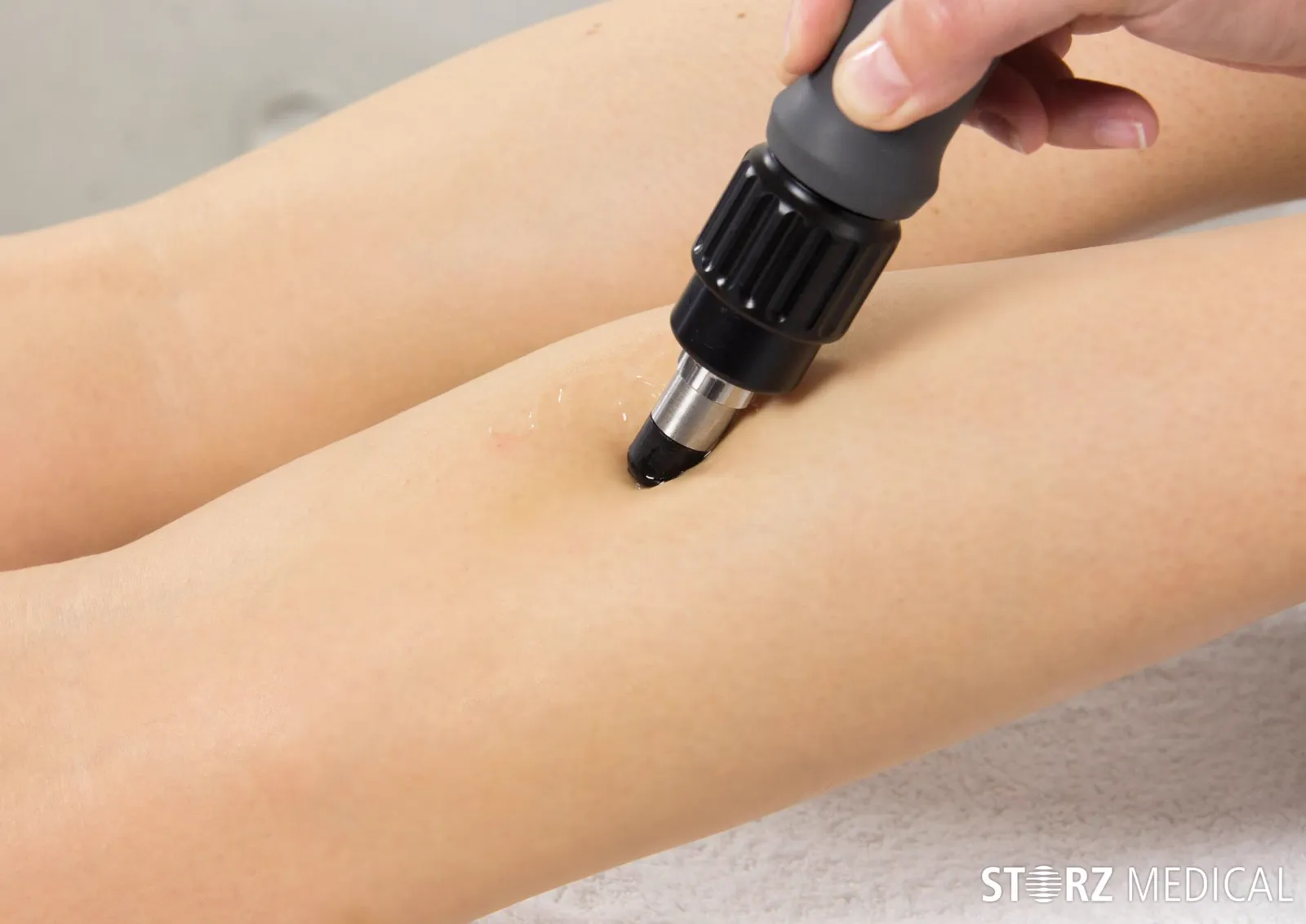
Low- to medium-energy acoustic waves are delivered through a handheld applicator and spread outward from the point of contact. That makes radial pressure wave ideal for broader areas and myofascial tension, while focal shockwave is reserved for deeper, more precise targets.
How radial pressure wave works
The pressure waves increase blood flow, delivering oxygen and nutrients that tissue needs to repair. They help break down adhesions and scar tissue to improve range of motion, temporarily reduce pain signals, and trigger a controlled inflammatory response that supports long-term regeneration. Patients usually describe a firm tapping or pulsing that can feel intense but is well tolerated.
A drug-free alternative to injections or surgery, with short sessions and little to no downtime.
Radial pressure wave combines well with focal shockwave, massage and osteopathic care, and it suits athletes as much as people living with chronic soft tissue pain.
Conditions we treat
We regularly use radial pressure wave therapy for:
- Plantar fasciitis, Achilles and patellar tendinopathy
- Tennis elbow, golfer’s elbow, rotator cuff pain and impingement
- IT band syndrome and myofascial trigger points
- Frozen shoulder, bursitis, hip pain and shin splints
- Lower back pain, neck tension, muscle stiffness and scar tissue adhesions
- Sports injuries, sprains, repetitive strain and delayed onset muscle soreness
What to expect
Your practitioner will assess your condition and explain how the therapy works before applying the handheld applicator to the affected area. A session lasts 15 to 25 minutes depending on the area treated. A standard course is 3 to 6 sessions spaced one to two weeks apart; many people feel some relief after the first visit. Mild redness or soreness afterwards is normal and short-lived.

